

How to Buy a Replacement Shower Head With the Right Fittings?
Quick Summary
To buy a replacement shower head with the right fittings, first measure the shower arm's thread type, diameter and length, then match those numbers to the product listing's connection specs. Confirm the thread is male or female, check the connector size, and use an adapter only if both ends match.
- Check whether the shower arm threads are male (outside) or female (inside) before ordering.
- Measure the outside diameter of the arm threads in inches or millimeters.
- Compare the listing's connection type and size to your measurements before buying.
- Keep the original packaging and receipt until the new head is installed and working.
Table of Contents
- Why Fittings Matter More Than Style When Buying a Replacement Shower Head
- How to Measure Shower Head Fittings Before You Shop
- Shower Head Connector Size and Thread Compatibility Explained
- When You Need a Shower Head Adapter for Different Threads
- Choosing Between 1.75 and 2.5 GPM Flow Rates
- What to Do When Fittings Do Not Match a Replacement Head
- Your Next Step: Checking Fittings and Ordering the Right Head at Max-Depot
- Frequently Asked Questions
How to Buy a Replacement Shower Head With the Right Fittings
Last Updated: October 30, 2026
Why Fittings Matter More Than Style When Buying a Replacement Shower Head
Before you compare finishes or spray settings, check the connection. The fitting decides whether the new head will actually work with your shower.
Most shower heads connect to a threaded shower arm. That arm is the pipe sticking out of the wall.
Watch out: Do not assume a head will fit because the box says "universal." Check the connection type first.
How to Measure Shower Head Fittings Before You Shop
Measuring needs only a flexible tape measure and a close-up photo of the shower arm. Do this before you start browsing. It saves you from ordering a head you cannot install.
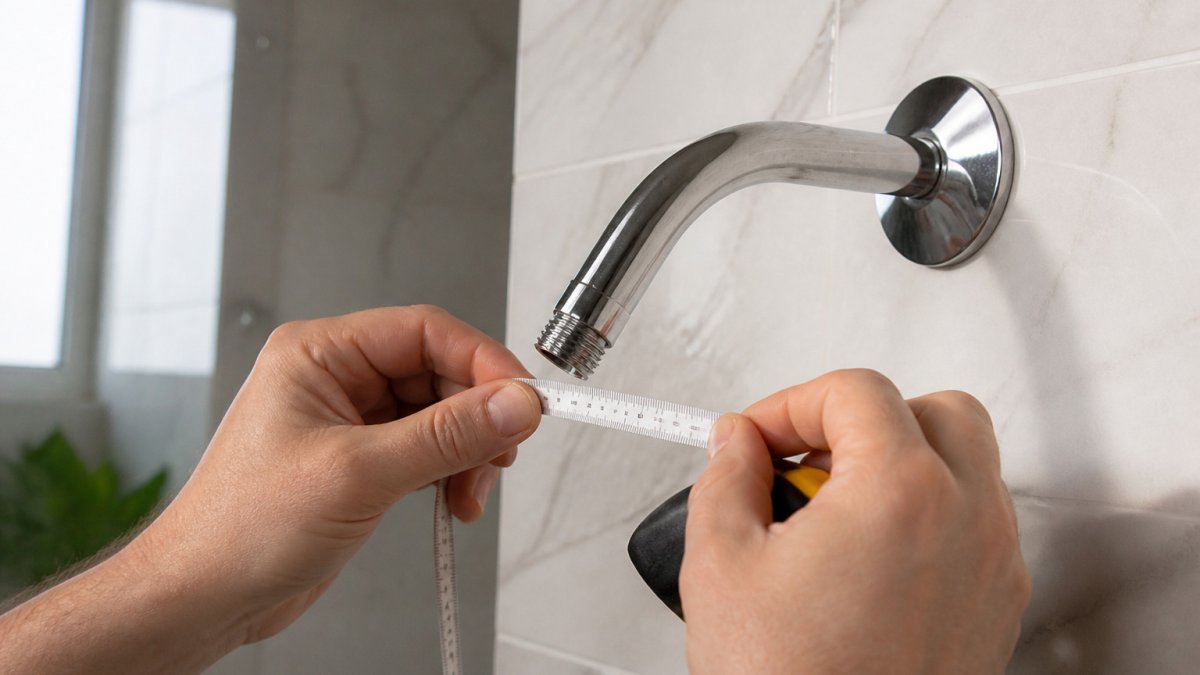
Start by taking off the old head, if you can. Use an adjustable wrench and turn it counterclockwise. Wrap the wrench jaws in a cloth so the finish does not scratch.
A Practical Fitting-Identification Checklist
Use this checklist to collect the exact information you need before ordering. Write each answer down or photograph it so you can compare it to product listings.
- Thread gender: Look at the end of the shower arm. If the threads are on the outside of the pipe, it is a male thread. If the threads are inside a collar or socket, it is a female thread. Confirm the gender rather than assuming it.
- Thread diameter: Measure the outside diameter of the threaded section with your tape measure. Record it in both inches and millimeters if your tape allows. Measure the diameter carefully, since older or imported fixtures can differ from standard sizes.
- Thread pitch (if visible): Count the number of thread ridges within a measured length, such as 1 inch. This helps distinguish coarse from fine threads when the diameter alone is ambiguous. If you cannot count confidently, take a sharp close-up photo instead.
- Shower arm length and angle: Measure from the wall escutcheon to the end of the arm. Note whether the arm is straight, angled, or curved. A longer or angled arm may need a head with a swivel joint to sit correctly.
- Arm finish and condition: Check for corrosion, cracks, or stripped threads. A damaged arm should be replaced before installing a new head, regardless of thread match.
- Existing washer or seal: Note whether the old head used a rubber washer, O-ring, or thread sealant. This tells you what sealing method the new head should support.
Identifying the Thread Type on Your Shower Arm
The thread is the spiral ridge on the arm where the head screws on. Look closely at the threads and note whether they are on the outside of the arm (male) or inside it (female).
Next, check the thread style. Check the thread standard on your arm before buying. Some older or imported fixtures use different thread standards, so do not guess. Note what you see and compare it to the product listing.
Keep these points in mind:
- Male threads sit on the outside of the arm
- Female threads sit inside the arm
- Standard connections are the most common in the US
- Imported or vintage fixtures may use a different standard and may need an adapter
Checking Connector Size and Shower Arm Diameter
Connector size tells you how wide the threaded opening is. Measure the outside diameter of the threads on the arm with your tape measure. Write the number down in millimeters or inches, whichever your tape uses.
Also measure the arm itself, not just the threads. Some arms are wider than the connection requires, and a head with the wrong opening can slip or wobble. Compare both numbers to the product specifications before you buy.
Specification Fields to Compare Before Buying
When you open a product listing, look for these exact fields and compare them to your checklist:
- Connection type: male or female, and thread standard if listed
- Connection size: the diameter in inches or millimeters
- Included adapters: whether the box includes a reducer or adapter for non-standard arms
- Washers and seals: whether a rubber washer or O-ring is included
- Shower arm compatibility: any note about minimum or maximum arm length or angle
- Flow rate: listed in GPM, which does not affect fit but affects performance
If a listing does not state connection type and size, contact the seller before ordering. Do not rely on photos alone to judge fit.
Use this checklist to gather the fitting details you need before you compare listings.
| Item | What to record | Why it matters |
|---|---|---|
| Thread gender | Male (outside) or female (inside) | Must match the arm |
| Thread diameter | Outside diameter in inches or mm | Confirms connector size |
| Thread pitch | Ridges per measured inch, or a close-up photo | Separates coarse from fine threads |
| Arm length and angle | Wall escutcheon to arm end; straight, angled or curved | Shows whether a swivel head is needed |
| Arm condition | Corrosion, cracks or stripped threads | Damage means replace the arm first |
| Existing seal | Rubber washer, O-ring or thread sealant | Shows what sealing the new head needs |
Shower Head Connector Size and Thread Compatibility Explained
Connector size and thread compatibility are two separate checks. Size is about width. Compatibility is about whether the thread pattern matches. A head can have the right width and still have the wrong thread.
Look for the connection type and size on the product listing. If they are missing, contact the seller before you buy. Do not rely on photos to judge fit.
Here is a simple check:
- Confirm the connection type on the listing matches your arm
- Confirm the size matches your measurement
- Confirm the product includes the parts you need, such as a washer or flange
When You Need a Shower Head Adapter for Different Threads
Sometimes the new head uses a different thread than your arm. In that case, a shower head adapter can bridge the gap.
Adapters are useful when the head and arm are close but not identical. They are less useful when the thread style is far off.
A common mistake is buying an adapter without checking both ends. Measure twice and confirm each side before you order.
Choosing Between 1.75 and 2.5 GPM Flow Rates
Flow rate is measured in gallons per minute, or GPM. A 1.75 GPM head uses less water. A 2.5 GPM head gives a stronger spray.
If your home already has low pressure, a higher flow rate may help you feel more spray. If your water pressure is strong, a lower flow rate can still feel good and save water.
Flow rate does not affect fit. Choose it after you confirm the connection works.
What to Do When Fittings Do Not Match a Replacement Head
If the new head does not fit, do not force it. Forcing a threaded fitting can crack the arm or strip the threads. Stop and check the problem first.
Start by confirming your measurements. Then compare the head and arm again. Common mismatches include wrong thread gender, wrong thread diameter or standard, or a damaged arm. Identify which one you have before choosing a fix.
Option 1: Use a Shower Head Adapter
An adapter screws onto your arm on one side and accepts the new head on the other. Adapters are the least invasive fix and are useful when the head and arm are close but not identical, such as a male-to-female conversion or a metric-to-standard conversion.
Check the adapter's specs carefully so both ends match. A common mistake is buying an adapter without checking both ends. Measure twice and confirm each side before you order.
Option 2: Replace the Shower Arm
If the arm itself is damaged, corroded, or uses a thread standard that no common adapter matches, replacing the arm is often simpler than hunting for a rare adapter.
This option is best for readers who are comfortable with a slightly larger repair. If the arm is stuck or the wall fitting looks corroded, stop and consider professional help rather than forcing it.
Option 3: Return or Exchange the Head
Keep the original packaging and receipt until the new head is installed and working. That way you can return it if the fit is wrong. Before returning, confirm that the listing's stated connection type and size did not match your measurements. If the listing was inaccurate, note that when you contact the seller.
When to Call a Plumber
Call a plumber if the arm will not unscrew, if the wall fitting leaks after you reinstall an arm, or if you cannot identify the thread standard even after measuring and photographing it. A plumber can also confirm whether the issue is the shower arm, the valve behind the wall, or a trim compatibility problem that a new head alone will not solve.
A Quick Fallback Plan
If you are unsure which option fits your situation, follow this order: confirm measurements and photos, check whether an adapter matches both ends, consider a replacement arm if the old one is damaged, and call a plumber if the wall fitting or valve is involved. This sequence keeps the fix proportional to the problem and avoids unnecessary returns or repairs.
Your Next Step: Checking Fittings and Ordering the Right Head at Max-Depot
Measure your shower arm, note the thread type and connector size, and check your flow rate preference before you shop. Then browse the replacement heads at Max-Depot, where you can find many shower products at prices that make sense for your home. Compare the connection details on each listing, and contact the seller if you are unsure about a fit.
Frequently Asked Questions
How do I know what size shower head fitting I need?
Start by measuring the threaded end of your existing shower arm where the head screws on. Measuring the outer diameter and counting threads per inch will confirm the thread size. Compare the diameter and thread count against the product listing before ordering. If the listing does not state the connection size, check the packaging or the manufacturer's specifications page, and confirm the thread direction is standard right-hand threading.
Will a new shower head fit my existing shower arm?
It will fit if the connection type and thread size match your shower arm. A head with the same connector size as your arm should screw on, though you should confirm the connection details on the listing. If the new head uses a different thread, a shower head adapter can bridge the gap. Check whether the head comes with a plumber's tape or rubber washer, and wrap the threads with plumber's tape before tightening to prevent leaks.
Should I choose a 1.75 or 2.5 GPM shower head?
A 1.75 GPM head uses less water and is a good choice if you want to lower your water bills or your home has limited water pressure. A 2.5 GPM head delivers a stronger spray, which some people prefer for a more satisfying shower experience. Check your local rules before deciding, since some areas may limit flow rates on new fixtures. Compare the gallons per minute rating on each product page before you decide.
Do I need an adapter to replace my shower head?
You only need an adapter if the new head's connection does not match your shower arm's thread size or type. Measure your current arm first. If the sizes match, no adapter is needed. If they differ, a threaded adapter with matching male and female ends can solve the problem, though you should confirm it fits the flow direction and seals properly. Check the listing details for connection type before buying.
