

Is Buying With Crypto Safe? A 2026 Guide
Table of Contents
- Is Buying With Crypto Safe? The Real Risks and Protections
- Understanding the Risks of Paying With Cryptocurrency
- How to Verify an Online Store Accepts Crypto Safely
- Understanding Crypto Payment Fees Before You Checkout
- Crypto Payment Refund Policy: What Happens When Things Go Wrong
- Best Practices for Secure Crypto Payments
- Comparing Crypto Payments to Other Payment Methods
- Frequently Asked Questions
Last Updated: October 19, 2026
Is Buying With Crypto Safe? The Real Risks and Protections
Buying with cryptocurrency carries real risks that differ from traditional payment methods. At Max-Depot, we help customers understand whether buying with crypto safe makes sense for them.
The short answer: it can be safe with specific precautions, but it's not safe by default. Crypto transactions are irreversible, wallet security is entirely your responsibility, and merchant fraud remains a genuine threat (Decoding the cryptocurrency user: An analysis of demographics and sentiments).
This guide covers the real dangers of paying with crypto, how to verify a merchant, and how to protect yourself at checkout.
Understanding the Risks of Paying With Cryptocurrency
Cryptocurrency payments create vulnerabilities that don't exist with credit cards or bank transfers: once you send crypto, you cannot get it back.
Irreversible transactions and theft
When you send cryptocurrency, the transaction confirms on the blockchain permanently. No chargeback exists, and no processor can reverse it. A single typo in a wallet address sends your funds to a stranger forever, and a merchant who disappears after payment leaves you no recourse, irreversibility shifts all the burden to you.
Cybersecurity threats and wallet security
Your wallet is only as secure as your private keys. Common threats include keylogging malware, phishing emails with fake login pages, unencrypted public WiFi, weak passwords, and lost recovery phrases. The wallet itself might be secure; your practices determine whether your funds stay safe.
Scams and fraudulent merchants
Crypto payments attract scammers because transactions are irreversible. Common scams include fake storefronts that vanish after payment, bait-and-switch merchants who never ship, overpayment requests for "fees" or "verification," and fake support agents after your wallet details.
How to Verify an Online Store Accepts Crypto Safely
Most guides say 'check reviews' and 'look for security badges', too vague to stop a determined scammer. Here is a concrete process: what to check, in what order, and which red flags should stop you.
Step 1: Confirm the payment destination is the merchant, not a stranger
The most common crypto payment scam is payment diversion, the checkout looks normal, but the wallet address or QR code has been swapped for the attacker's. Before sending:
- Compare the checkout wallet address to the one in the merchant's official documentation or support page. If they don't match, stop.
- Never trust a QR code you didn't generate or that appeared after a redirect. QR-code substitution points the visible code at the attacker's wallet while the page shows the merchant's name.
- Check whether the address is a personal wallet or processor-hosted. Legitimate merchants typically route through a processor (BitPay, Coinbase Commerce, CoinGate). A bare wallet address with no invoice or order ID is a red flag.
Step 2: Verify the merchant's identity, not just their website
A polished storefront is cheap to build; identity is harder to fake:
- Check domain age via public WHOIS lookup. Domains registered in the last few months are higher risk, especially for high-value goods.
- Confirm the business is registered where it claims to be, US secretary-of-state databases and EU company registries are public. No registration trail is a warning sign.
- Look for a physical address and a working phone number. Call it. Scam storefronts often list a virtual office or disconnected number.
Step 3: Inspect the checkout flow for known scam patterns
Scammers reuse a small set of tricks:
- Fake checkout overlays: A pop-up asks you to 'confirm payment' by re-entering your seed phrase or private key. No legitimate merchant or processor ever needs these, always a scam.
- Payment outside the trusted checkout: Being asked to send crypto to a 'support agent' via DM, WhatsApp, or Telegram to 'complete the order.' Legitimate checkout happens on the merchant's own site.
- Overpayment or 'verification' requests: Extra crypto to 'unlock' the order, cover 'network fees,' or 'verify' your wallet, advance-fee scams.
Step 4: Confirm the merchant's refund and dispute terms before paying
Ask, in writing, before you send funds:
- What is the refund policy for crypto payments specifically? (Many refund in crypto, not fiat, at what exchange rate?)
- Does the payment processor offer any dispute or mediation process?
- What is the order ID, and how do you reference it if something goes wrong?
A merchant who can't answer clearly is one you shouldn't pay in crypto. Save the answers.
Understanding Crypto Payment Fees Before You Checkout
Crypto transaction fees go to the network, not the merchant, and vary by coin:
- Bitcoin: Often $5-50 depending on network congestion
- Ethereum: Typically $2-30 depending on gas prices
- Stablecoins: Usually under $1 on major networks
The merchant may add a processing fee on top, some processors bundle a 1-3% markup, others charge flat per-transaction fees. Ask whether fees are included in the displayed price or added at checkout.
Crypto Payment Refund Policy: What Happens When Things Go Wrong
This is where buying with crypto safe becomes complicated. Refunds with cryptocurrency are difficult by design, but 'difficult' is not the same as 'impossible.'
What 'the transaction went through' actually means
Before you can resolve a problem, know what state your payment is in:
- Broadcast but unconfirmed: In the mempool awaiting a block. It can still be replaced (via RBF) or dropped if fees are too low, the only window where you have meaningful control.
- Confirmed: In a block. Once confirmed, the payment is final from the network's perspective.
- Confirmed and received by the merchant: The merchant's wallet or processor has credited it. Any refund from here is a new, separate transaction the merchant must choose to send.
Don't assume a 'pending' transaction is stuck and send a second payment. Check the transaction hash on a block explorer first (mempool.space for Bitcoin, Etherscan for Ethereum).
Why refunds are difficult with cryptocurrency
Crypto transactions cannot be reversed like credit card chargebacks. Once the merchant receives your payment, they control whether to refund you, and no payment network can force them.
A typical refund process:
- You request a refund in writing, referencing the order ID and transaction hash
- The merchant decides whether to approve it
- If approved, they send crypto to a wallet address you provide
- That refund is itself irreversible, a wrong address means the refund is gone too
Two complications most guides skip:
- Refund currency and exchange rate. If you paid in Bitcoin and the price moved, the merchant may refund the same fiat value or the same BTC amount. Ask which policy applies before you pay.
- Refund address ownership. You must provide an address you control. If you paid from an exchange-hosted wallet, confirm the refund process with that exchange.
What to do when a transaction fails or the merchant doesn't deliver
Act in this order, each step creates a record for the next.
- Verify the payment on-chain. Use the transaction hash to confirm the merchant received the funds. If unconfirmed, wait, don't resend.
- Contact the merchant in writing within 24-48 hours. Use email or their support portal, not social DMs. State the order ID, transaction hash, amount, and problem, and request a refund or replacement in writing.
- Quote their stated refund policy back to them. Merchants respond better when you reference their own terms.
- Escalate to the payment processor if one was used. BitPay, Coinbase Commerce, and CoinGate have dispute or mediation channels. They can't reverse a confirmed on-chain payment, but they can pressure merchants and suspend accounts.
- File complaints with consumer protection agencies. In the US, the FTC, state attorney general, and CFPB; in the EU, national consumer authorities and the European Consumer Centre network. These rarely recover funds but create an official record.
- Report to the platform where you found the merchant (marketplace, social platform, ad network), often the fastest way to get a scam storefront taken down.
What recovery realistically looks like
Be honest about outcomes:
- Legitimate but slow merchant: Most disputes resolve through merchant support, especially with documentation and their refund policy cited.
- Scam merchant: On-chain funds are effectively gone. Your goal shifts from recovery to reporting and preventing further loss.
- Processor with mediation: A real, if limited, channel, the strongest argument for paying through a processor rather than a bare wallet address.
This is why verifying the merchant beforehand is critical. The best refund policy is the one you never need.
Best Practices for Secure Crypto Payments
Follow these steps every time you pay with cryptocurrency to minimize risk.
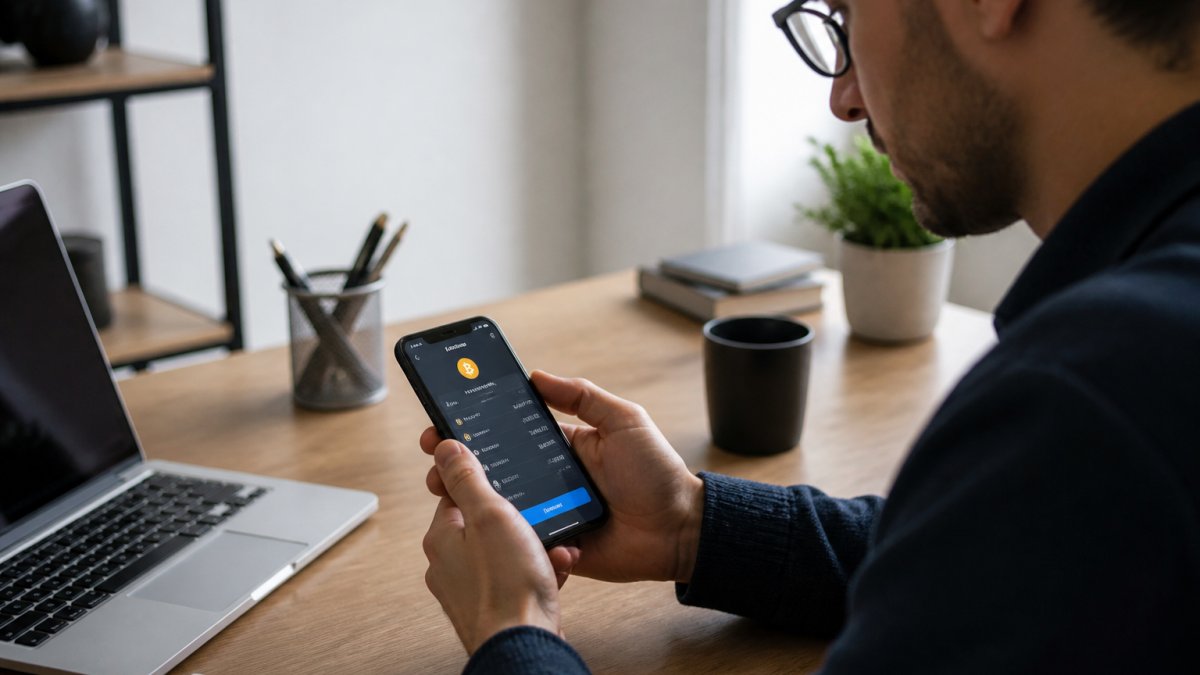
Protect your private keys and wallet
Your private key is the master password to your funds, protect it like your house key:
- Never share your private key with anyone, including customer support, merchants, or friends
- Use a hardware wallet for large amounts, keys stay offline and are nearly impossible to hack
- Enable two-factor authentication on wallet and exchange accounts
If you lose your private key, you lose access permanently, there is no "forgot password" option.
Verify transaction details before confirming
Before you hit send, double-check everything:
- Confirm the wallet address: Copy and paste carefully, or scan a QR code, never type it manually
- Verify the amount you're sending
- Check the fee is reasonable for the network
A single mistake sends your crypto to the wrong place forever. Verification takes seconds and prevents catastrophic errors.
Use stablecoins to reduce price volatility risk
Stablecoins are pegged to a stable value, usually the US dollar, so your purchase price doesn't fluctuate between checkout and confirmation. Bitcoin can swing 10-20% in a day, if it drops 15% before your transaction confirms, you've overpaid significantly.
Common stablecoins:
- USDC, backed by US dollar reserves
- USDT, most widely accepted stablecoin
- DAI, decentralized stablecoin
Many merchants accept them. Ask before paying.
Comparing Crypto Payments to Other Payment Methods
Crypto payments have trade-offs versus traditional methods. Understanding them helps you decide whether crypto makes sense for a purchase.
| Payment Method | Reversible | Fees | Buyer Protection | Speed |
|---|---|---|---|---|
| Credit Card | Yes | 2-3% | Strong (chargeback) | Instant |
| Debit Card | Limited | 1-2% | Weak (bank dispute) | Instant |
| Bank Transfer | No | $0-5 | Moderate (bank review) | 1-3 days |
| Cryptocurrency | No | Variable | Minimal | 10 mins-1 hour |
| PayPal | Yes | 2.2% + $0.30 | Strong (dispute) | Instant |
For high-value purchases or unfamiliar merchants, credit cards are safer. For merchants that don't accept cards or buyers who prioritize privacy, crypto is an option if you accept the risks.
Paying with cryptocurrency can work, but it requires more caution than traditional methods.
Frequently Asked Questions
What are the main risks of paying with cryptocurrency?
The primary risks include irreversible transactions (once sent, crypto cannot be recovered if the address is wrong), theft from hacking or phishing, limited buyer protections compared to credit cards, and exposure to price volatility if the merchant delays processing. Scams and fraudulent merchants also pose significant threats. Unlike chargebacks available with traditional payment methods, cryptocurrency transactions are permanent and difficult to reverse.
How can I verify an online store accepts crypto before making a purchase?
Check if the store displays logos from legitimate payment processors that handle crypto transactions. Research the merchant's reputation through customer reviews, verify their business registration, and look for clear terms of service and contact information. Be cautious of new merchants with no history. Avoid stores that pressure you to pay with crypto exclusively. Legitimate retailers typically offer multiple payment options.
Can I get a refund if something goes wrong with a crypto payment?
Refunds are significantly more difficult with cryptocurrency than traditional payment methods. Once a transaction is confirmed on the blockchain, it cannot be reversed. Some merchants may issue refunds as new crypto transactions if you request them, but this is voluntary. Unlike credit card chargebacks, there is no automatic buyer protection. Always verify merchant legitimacy and transaction details before sending funds. Keep records of all communications and transaction confirmations for your records.
What fees should I expect when paying with cryptocurrency?
Crypto payment fees typically include network transaction fees (paid to miners or validators) and potentially a merchant processing fee. Network fees vary based on blockchain congestion and can range significantly. Some merchants absorb these costs; others pass them to customers. Always check the total cost before confirming payment, as fees can substantially increase your final price. Stablecoins may have lower volatility but still incur transaction fees. Compare the total cost to alternative payment methods before deciding to pay with crypto.